

PO 6 High Density Wetland System (2025)
Targeted restoration of critical wetland ecosystems within the property, informed by TEK and hydrological assessments. This system uses high-density planting of specific native wetland tree and plant species with a strict focus on maximizing ecological function – water filtration, flood mitigation, and habitat creation for aquatic and semi-aquatic wildlife. Monitored intensively using water quality sensors and eDNA. It serves purely as a regeneration effort with no harvest component, contributing vital ecosystem services and resilience against climate impacts in the Daintree catchment.

Nature Positive Context
Development Phase: Methodologies Developed (Quadrant 2)
Applying science-backed and community-authenticated approaches.
Investment Index Alignment
Specific Natural Capital Targets
Field Test Status
Field testing has not yet been conducted or completed.
Claimed Co-Benefits (LRF Standard)
Environmental Co-Benefits
Native Vegetation
Improvement in native vegetation condition through high-biodiversity reforestation/regeneration activities.
Eligibility: Project involves reforestation in Queensland using native species.
Threatened Wildlife
Improved habitat suitability and connectivity for threatened species (e.g., Cassowary) within project area, evidenced by monitoring.
Eligibility: Project improves vegetation structure & diversity in potential MSES/MNES habitat in QLD.
Wetlands
Improvement to wetland native vegetation condition and water quality function.
Eligibility: Project restores native vegetation and hydrological function in mapped wetland REs.
Great Barrier Reef
Reduced sediment/nutrient runoff potential due to improved vegetation cover and soil health within GBR catchment.
Eligibility: Project located in GBR catchment, improves vegetation cover and/or soil health (requires specific evidence).
Soil Health
Demonstrated improvement in soil organic carbon and/or soil health indicators through regenerative practices.
Eligibility: Project implements practices known to improve soil health (e.g., organic inputs, reduced tillage). Requires baseline and follow-up soil testing.
Socio-Economic Co-Benefits
Employment and skills benefits
Creation of regional employment opportunities (? FTE) and potential skills training in regen ag/tech.
Eligibility: Project operates in regional QLD (Daintree) and employs local workers or provides accredited training.
First Nations Co-Benefits
First Nations benefits based on participation
Direct involvement and collaboration with Eastern Kuku Yalanji Traditional Owners, including documented integration of TEK in planning/management.
Eligibility: Project directly involves First Nations participation (partnership, employment, TEK integration) documented via agreements/logs.
Project Risks and Mitigation
Resource Allocation Conflicts
Shared protocols, regular planning meetings with main project team.
Protocol Deviation Risk
Clear internal protocols, regular checks, training.
SDG Alignments
Project Details
Methodology Details
Core Ontology Terms
Implementation & Stakeholders
Implementing Partners
Primary Stakeholders
Financial Highlights
- Internal Funding Allocation
- Contribution to Main Project Verifiable Units
Applicable Standards
Map Location
Related Projects
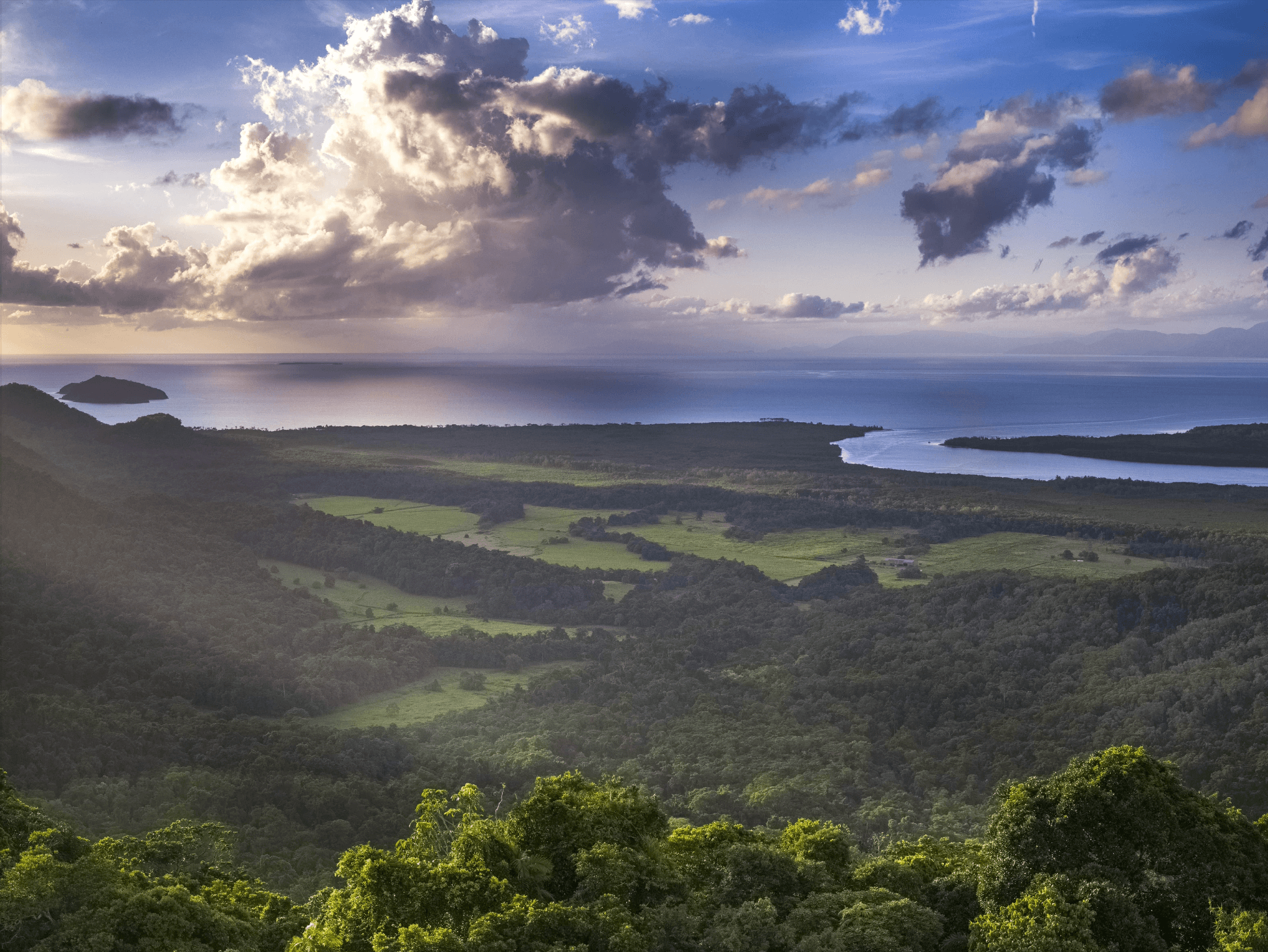
ClimateForce Daintree Pilot Project
An integrated advanced regeneration project demonstrating a blueprint for creating verifiable natural assets. Located on former sugarcane land, this site pioneers High Biodiversity Planting (informed by TEK & provenance tracking), off-grid innovation (Tech x Nature via SMART Rainforest Platform with IoT sensor networks), and First Nations Partnerships. It serves as a living laboratory for scalable, data-driven solutions enhancing economic resilience, ecosystem health (soil, water, biodiversity), and sustainable livelihoods, maximizing Return on Regeneration through rigorous monitoring and organic management.
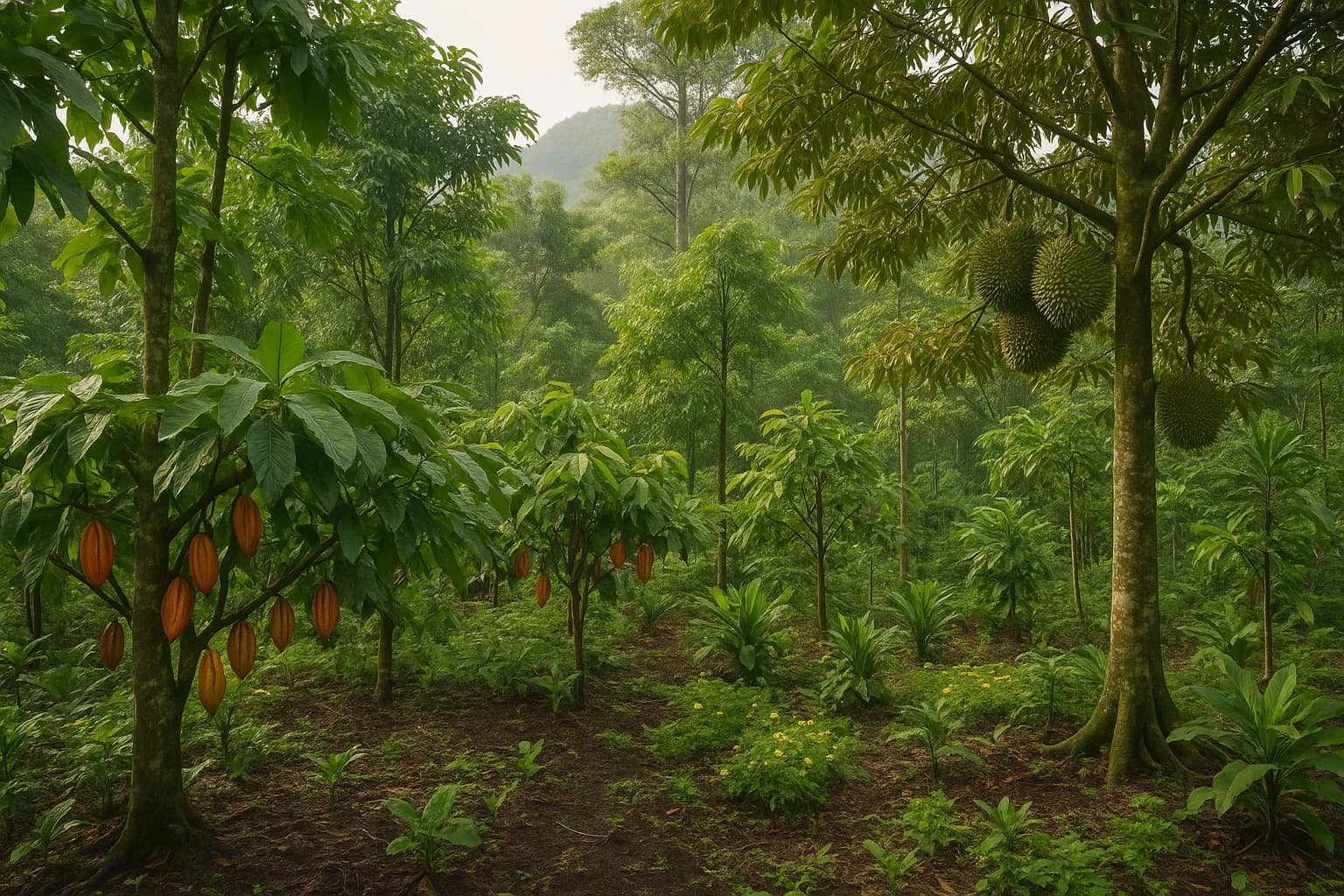
Mixed Native/Cacao/Durian Agroforestry (51/45/4) - Year 5 Simulation
Simulating Year 5 of the 1-hectare Mixed Native/Cacao/Durian Agroforestry Project (51/45/4). Assumes whole fruit Durian sales, short-cycle intercropping, and organic certification. Showing early yields, monitoring data, and completed initial authentication steps.
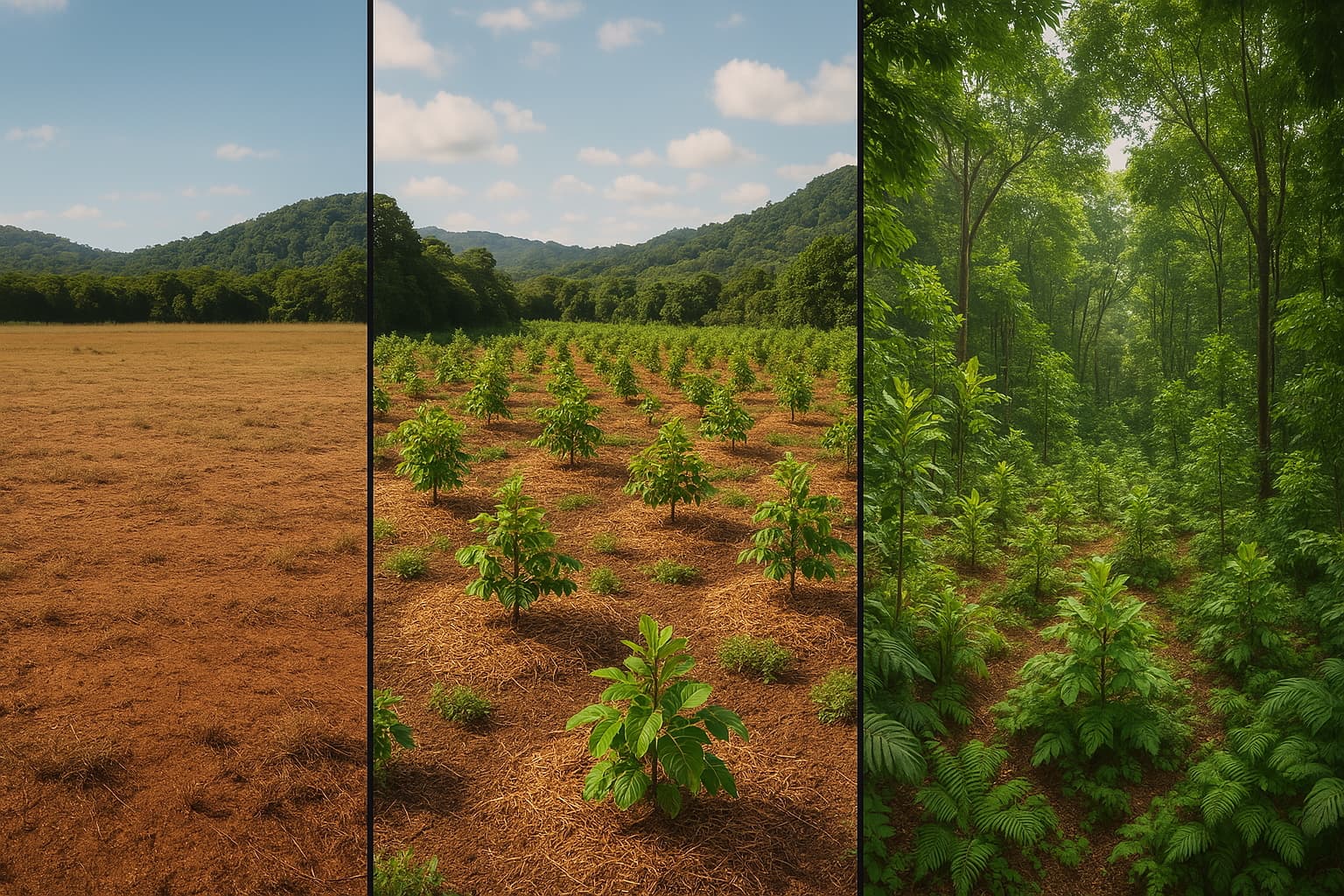
PO 1 Pure Native Regen (2021)
Pioneering pure native regeneration in the heart of the Daintree, using TEK-informed species selection and provenance tracking. This initial plant-out directly compares high-density (800mm) vs. standard (1,200mm) spacing to understand optimal strategies for accelerating canopy closure and maximizing biodiversity return in previously cleared areas. It serves as a living laboratory, gathering crucial data on growth rates (via LiDAR) and ecosystem recovery (via bioacoustics), providing a vital alternative to struggling local monocultures like sugarcane and paving the way for scalable, high-impact rainforest restoration under organic management protocols.