

ClimateForce Projects
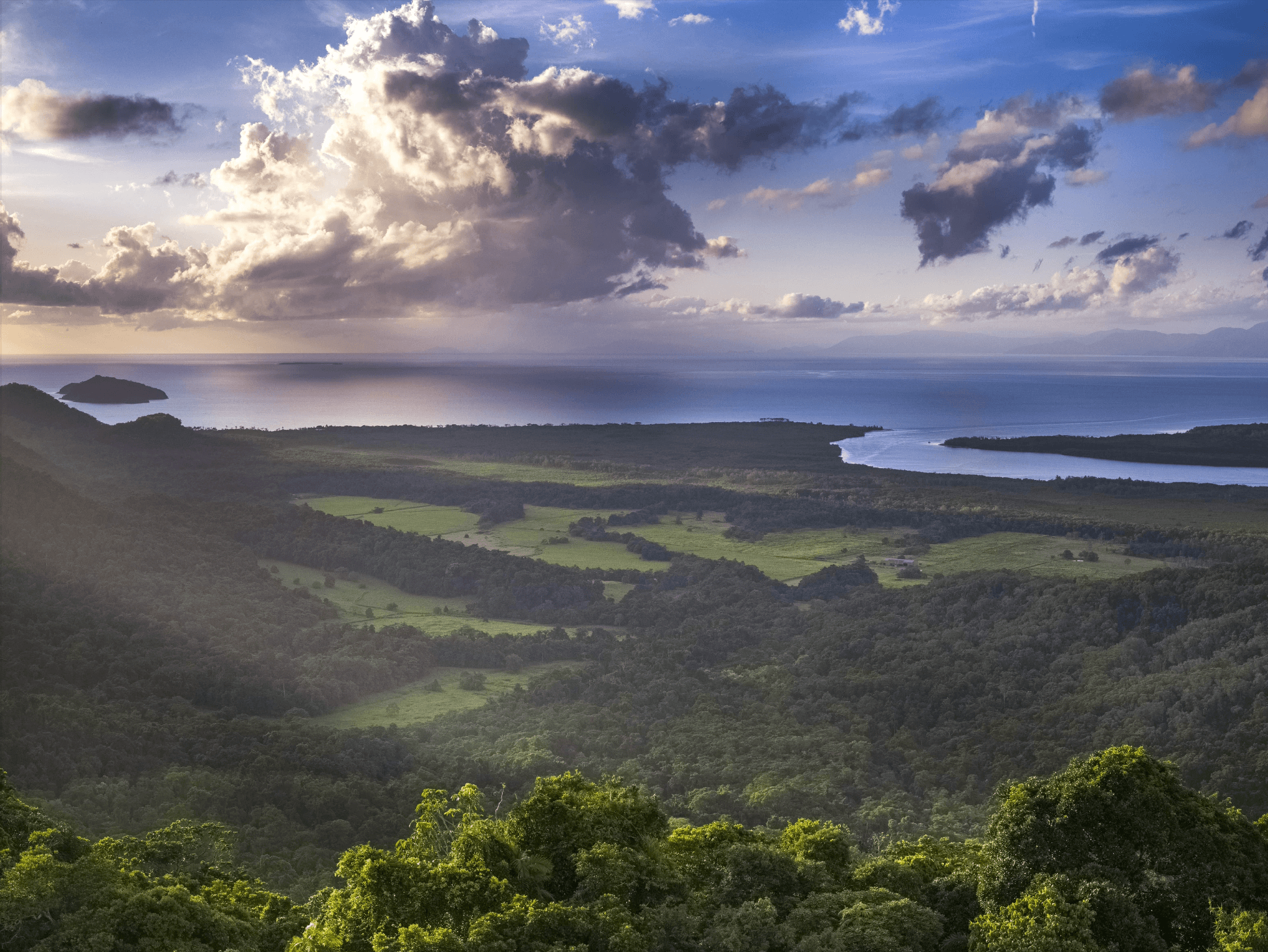
Explore the main Daintree Pilot Project and its specific planting operations and methodologies.
Specific Planting Operations (Sub-Projects)
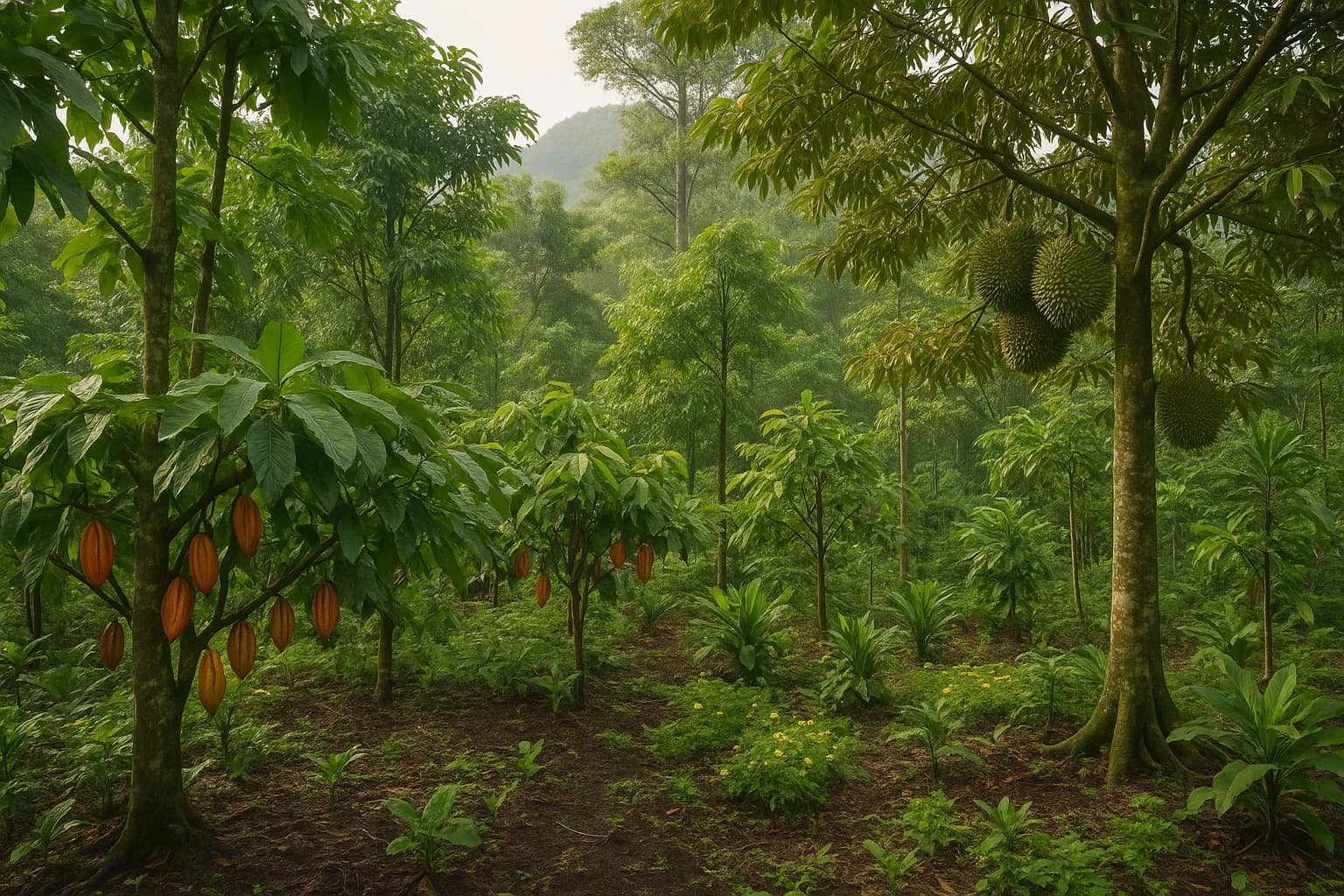
Mixed Native/Cacao/Durian Agroforestry (51/45/4) - Year 5 Simulation
Simulating Year 5 of the 1-hectare Mixed Native/Cacao/Durian Agroforestry Project (51/45/4). Assumes whole fruit Durian sales, short-cycle intercropping, and organic certification. Showing early yields, monitoring data, and completed initial authentication steps.
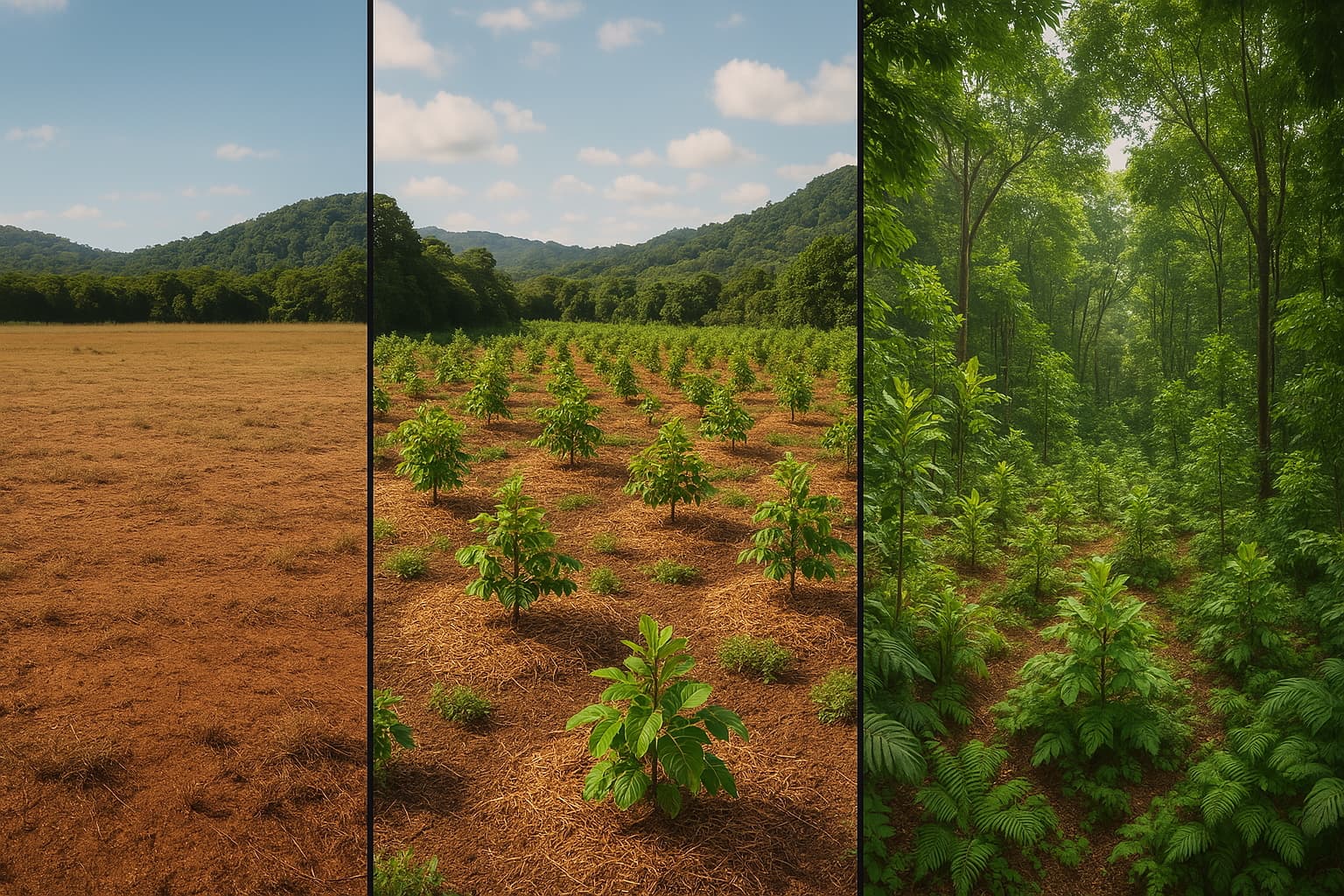
PO 1 Pure Native Regen (2021)
Pioneering pure native regeneration in the heart of the Daintree, using TEK-informed species selection and provenance tracking. This initial plant-out directly compares high-density (800mm) vs. standard (1,200mm) spacing to understand optimal strategies for accelerating canopy closure and maximizing biodiversity return in previously cleared areas. It serves as a living laboratory, gathering crucial data on growth rates (via LiDAR) and ecosystem recovery (via bioacoustics), providing a vital alternative to struggling local monocultures like sugarcane and paving the way for scalable, high-impact rainforest restoration under organic management protocols.
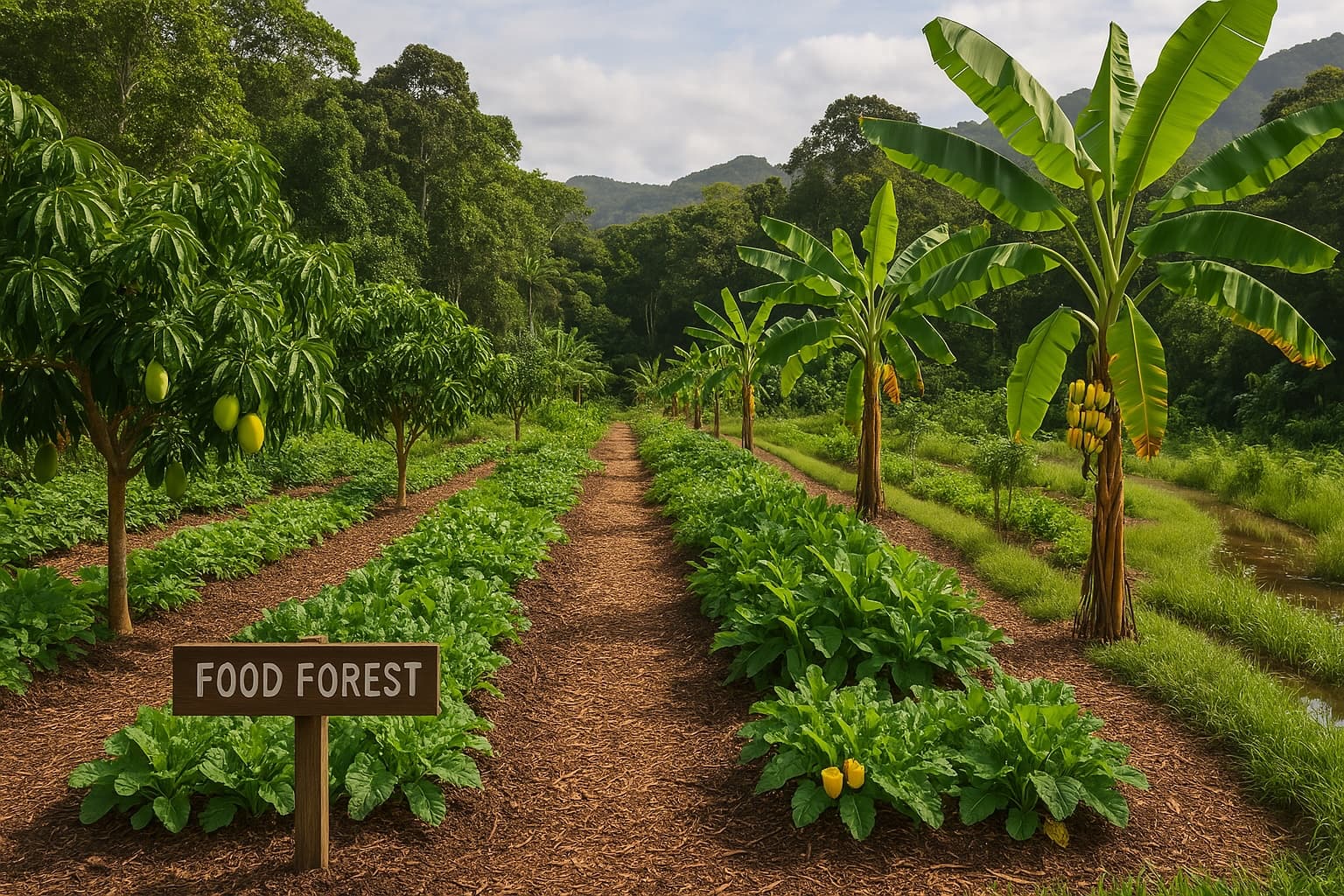
Basic Permaculture Agroforestry System
An foundational exploration into integrating productive agriculture with ecological restoration using organic permaculture principles. This system applies permaculture principles to establish a diverse mix of fruit trees, understory crops, and support species, managed with organic inputs and IPM. It aims to demonstrate how food production can coexist with, and even enhance, biodiversity and soil health in the wet tropics. Represents an early model for diversifying local economies beyond traditional agriculture, offering potential for higher value crops and increased ecological resilience compared to conventional farming.
PO 2 Pure Native Regen (2023)
Building upon learnings from PO 1, this second phase expands pure native regeneration efforts using optimized organic techniques. It focuses on applying optimized planting densities and species mixes (informed by provenance data and TEK) identified in earlier trials to restore larger tracts of degraded land. Emphasis is placed on re-establishing key ecological functions, enhancing habitat connectivity for Daintree wildlife (like the endangered Cassowary), and significantly boosting carbon sequestration potential. Advanced drone mapping (multispectral) and species surveying (eDNA, camera traps) techniques track progress.
PO 3 Pure Native Regen (2024)
Continuing the large-scale restoration trajectory, PO 3 focuses on accelerating ecological complexity within regenerated areas using adaptive management informed by sensor data. This involves strategic enrichment planting with later-successional species and creating microhabitats to attract a wider range of fauna. It represents a commitment to not just regrowing forest, but rebuilding a truly resilient and biodiverse Daintree ecosystem, providing invaluable data for global rainforest restoration efforts and showcasing long-term carbon capture potential verified through rigorous monitoring.
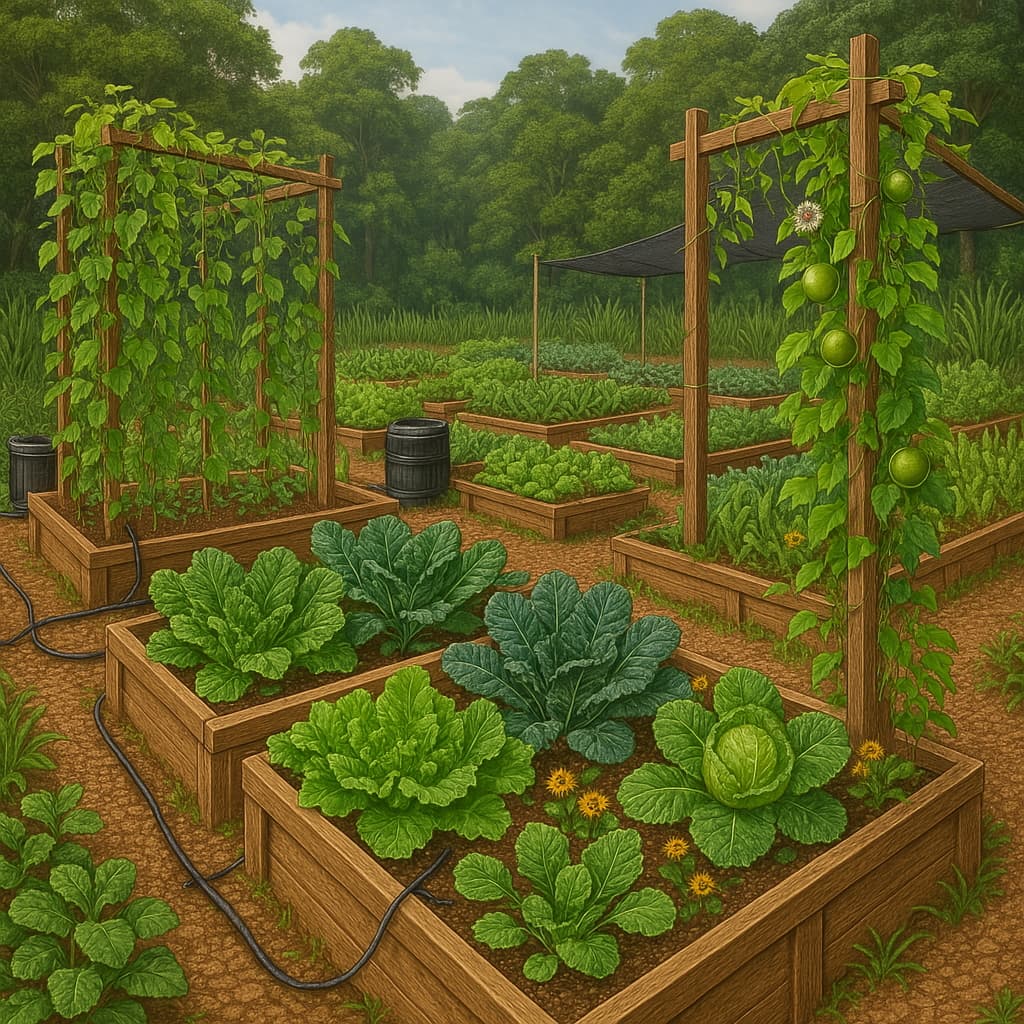
Raised Garden System, Trellising
An intensive food production model utilizing raised garden beds and vertical trellising, managed with organic inputs and IPM strategies. Designed for high-yield organic vegetable and fruit cultivation within a smaller footprint, this system showcases efficient land use and water management. It supports the Climate Force site's self-sufficiency goals and serves as a replicable model for localized, high-nutrition food production in tropical communities, with detailed cost-benefit analysis tracked for economic viability.
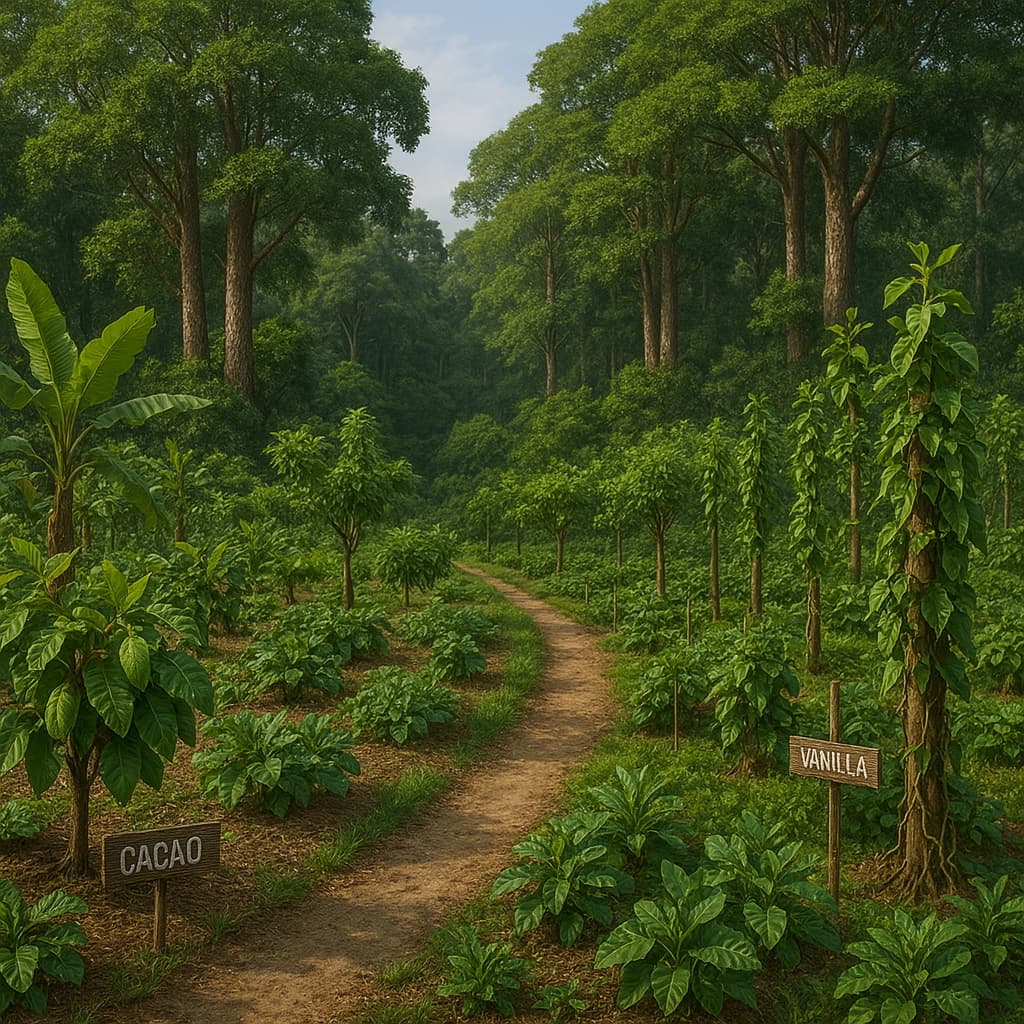
PO 4 Mixed Native & Agroforestry (2025)
A strategic blend aiming for both ecological restoration and sustainable economic output, implementing organic management across all activities. This system integrates a majority (75%) of native timber and food species (e.g., Davidson Plum, Lemon Myrtle, selected with TEK input) with a smaller component (25%) of high-value non-native tropical products like select varieties of durian and cacao. It exemplifies a diversification strategy, creating multiple income streams and enhanced biodiversity compared to monocultures, while generating data on integrating conservation and commerce through detailed yield and input monitoring.
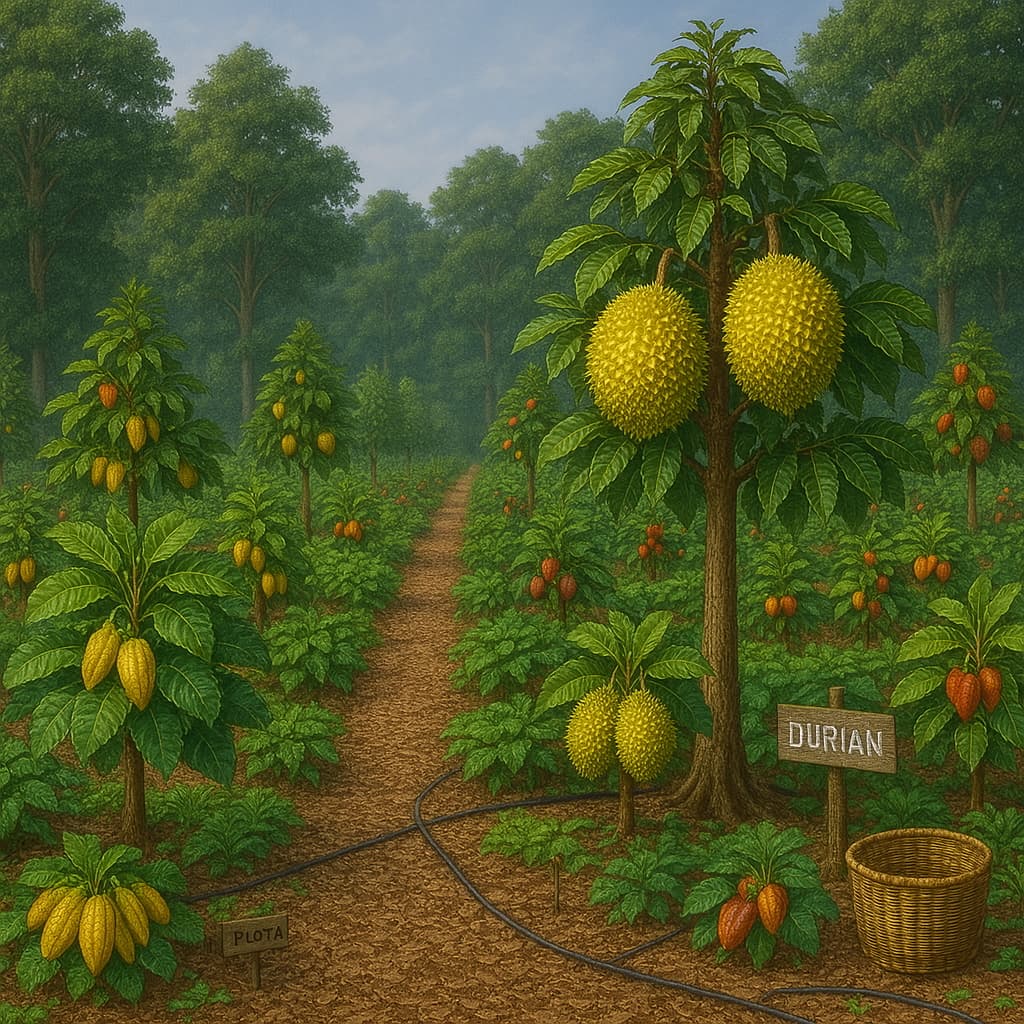
PO 5 Agro Durian (2025)
An ambitious high-density agroforestry model centered around premium durian cultivation using precision planting and organic soil management. Mimicking natural forest structure, durian trees are interplanted in a grid style with complementary species like cacao, cempedek, taro, ginger, and banana. This system tests the potential for high-value, multi-crop production, aiming to demonstrate significantly higher profitability and job creation per hectare compared to traditional cattle grazing or sugarcane, while maintaining soil health and functional biodiversity through IPM and careful monitoring.

PO 6 High Density Wetland System (2025)
Targeted restoration of critical wetland ecosystems within the property, informed by TEK and hydrological assessments. This system uses high-density planting of specific native wetland tree and plant species with a strict focus on maximizing ecological function – water filtration, flood mitigation, and habitat creation for aquatic and semi-aquatic wildlife. Monitored intensively using water quality sensors and eDNA. It serves purely as a regeneration effort with no harvest component, contributing vital ecosystem services and resilience against climate impacts in the Daintree catchment.